
Chalmette City Directory Collections
No single shelf holds a complete Chalmette city directory run. The strongest confirmed printed set is Louisiana State Museum record group RG 514, while Nunez Community College supplies the deepest local name index and related files. The State Library and State Archives broaden the search with Louisiana directories, phone books, newspapers, maps, census material, church records, and parish microfilm. Each holding has a different access route, so note the collection name and item number before asking for help.
| Collection | Years or scope | Where held | Access |
|---|---|---|---|
| St. Bernard telephone directories, RG 514 | Labels for 2003-2004 through 2007-2008 | Louisiana State Museum Historic Center | Request items 2007.65.1-2, 2007.122, and 2007.143 |
| Nunez local archives | About 200 linear feet; Police Jury minutes, 1880-1929 | Nunez Community College, Chalmette | Free public research; staff help in person and at a distance |
| Louisiana Collection | Statewide town directories, newspapers, maps, and microfilm | State Library, Baton Rouge | Walk-in research and staff inquiry |
| State Archives | Government, manuscript, church, newspaper, and vital-index material | Louisiana State Archives | Online catalog, on-site reference, and mail research |
The catalog does not establish a full publisher run. It even describes three books while listing four date labels. Treat those labels as verified objects, not proof that every year exists. Ask the holding institution to confirm the volume, condition, access rule, and scan cost before a trip.
Nunez Indexes Chalmette Names
Nunez Community College Library Archives is the best documented local starting point when a city directory entry is missing. Its Frank Fernandez Collection has an index of more than 50,000 entries. Bound finding aids at the circulation desk lead into clippings, maps, photographs, historic-home files, programs, postcards, church-fair material, newsletters, and post-Katrina records.
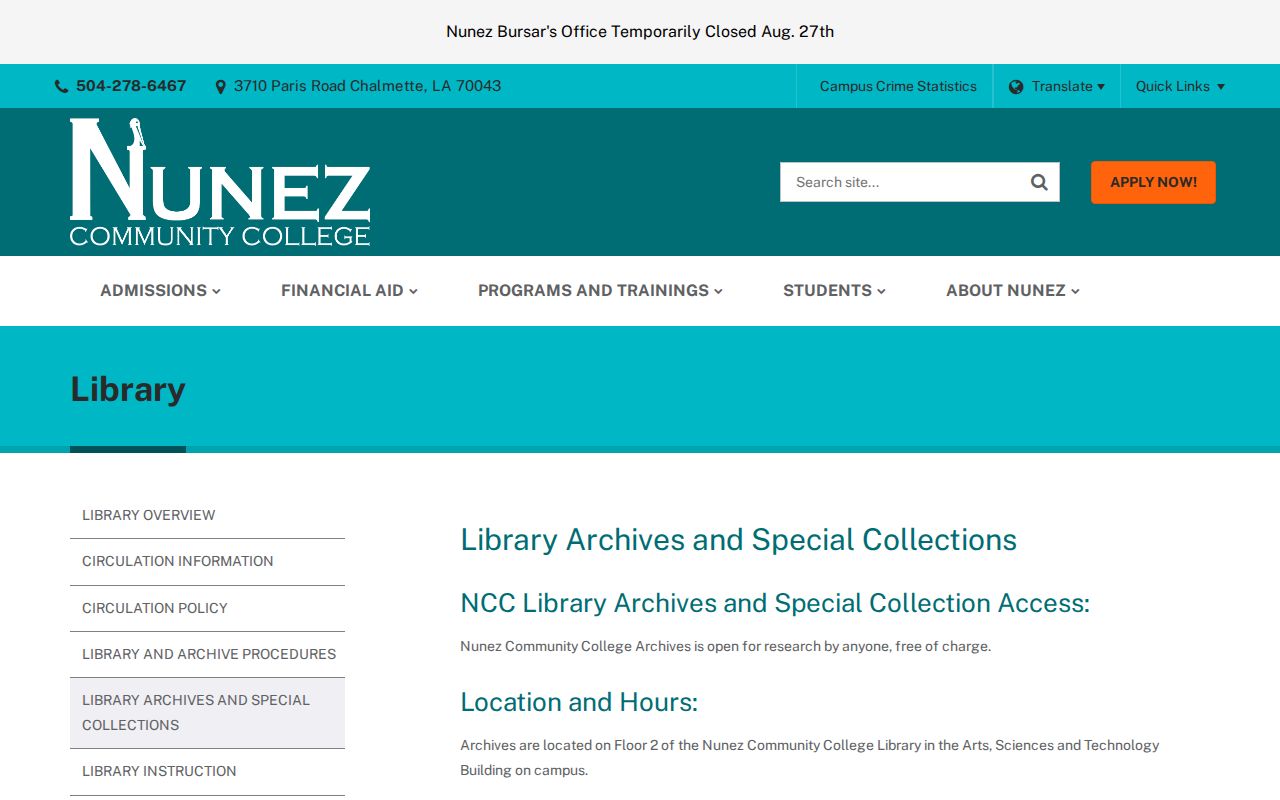
The archive is open to anyone at no charge at 3710 Paris Road. Help is available in person, by phone at 504-278-6232, by mail, email, or web call. Give staff a surname, street, date span, and likely collection. Reproduction and publication may still depend on copyright and collection limits.
Chalmette Telephone Directory Years
The Louisiana State Museum catalog confirms St. Bernard Parish telephone directories labeled 2003-2004, 2005-2006, 2006-2007, and 2007-2008. That short run crosses Hurricane Katrina, which makes it useful for tracking whether a household, phone listing, or local firm appears before and after the storm. It is not a complete Chalmette city directory chronology, and the accessible catalog does not name the publisher.
A request should cite RG 514 and the item IDs, not just ask for “old phone books.” Ask whether the volume has an alphabetical section, a street-order section, or both. The catalog page is collection-level only, so actual names and page abbreviations require inspection or a staff-provided scan.
Katrina Changed Chalmette Directories
The RG 514 description records a striking physical contrast. A pre-Katrina directory was about three-quarters of an inch thick, while a later book was about one-quarter inch. The catalog ties that change to loss of population, infrastructure, and businesses. Book thickness is not a resident count, but it is a rare measurable sign of community disruption inside the directory collection itself.
An absent listing after Katrina does not prove death or a permanent move. A family may have been displaced, changed its phone service, or chosen not to list. Pair the directory evidence with Nunez Katrina files, news coverage, assessor records, and oral histories before drawing a conclusion.
Reading Chalmette Directory Entries
A printed entry is a dated publication snapshot, not a legal statement of residence. Depending on the volume, it may give the listed person's name, a spouse or household note, a phone number, a street address, a trade, or a business. The verified St. Bernard catalog does not expose a sample page, so the fields below describe common directory conventions and the FamilySearch collection, not guaranteed RG 514 fields.
| Name | Surname, given name, initials, and sometimes a spouse or household notation |
|---|---|
| Address | House number and street as printed when the volume was compiled |
| Phone | The listed line in telephone-book runs |
| Work or business | Occupation or business name when that publisher included it |
| Abbreviations | Short forms defined by the volume's own key |
- Criss-cross directory
- A section ordered by street and house number rather than by surname.
- Householder index
- A list centered on named household heads or listed subscribers.
- Abbreviation key
- The publisher's legend for short forms and symbols. Read it before interpreting an entry.
State Shelves Extend Chalmette Research
The State Library Louisiana Collection holds city directories and telephone books for Louisiana towns, plus newspapers, maps, census records, parish material, vertical files, and microfilm. Its public walk-in hours were shown as 10:00 a.m. to 2:00 p.m., Monday through Thursday. The exact Chalmette run was not listed online, so contact staff before relying on a shelf visit.
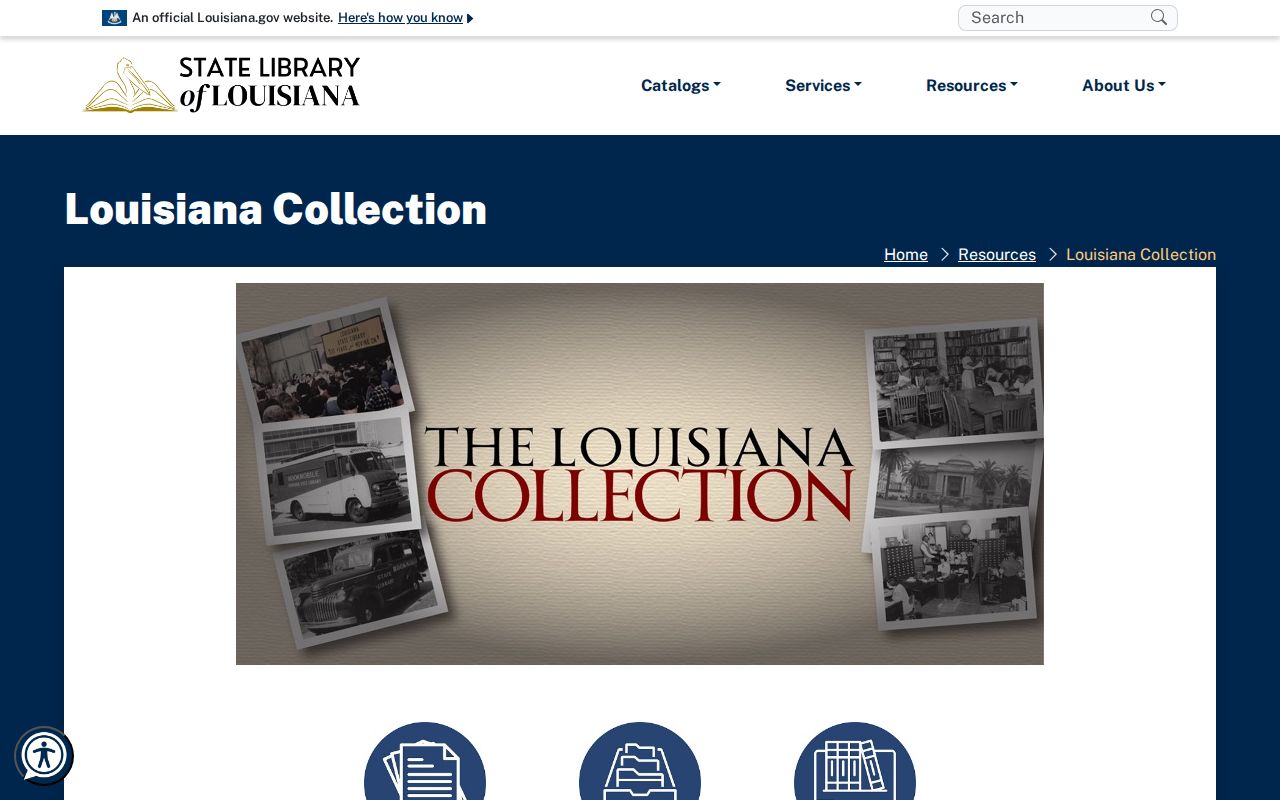
The State Library works best as a broad catalog fallback. It can connect a directory name to maps, newspapers, census sheets, or parish microfilm. Record the call number and the geographic label used by the catalog because older material may say St. Bernard, Arabi, or another community rather than Chalmette.
Louisiana Archives for Chalmette Records
The Louisiana State Archives research library supplies government and manuscript records, newspapers, microfilm, subject guides, public vital indexes, and a guide to Clerk records. Search the online catalog first. If the needed item is not digitized, use on-site reference or the mail research service with a name, date range, parish, and record series.
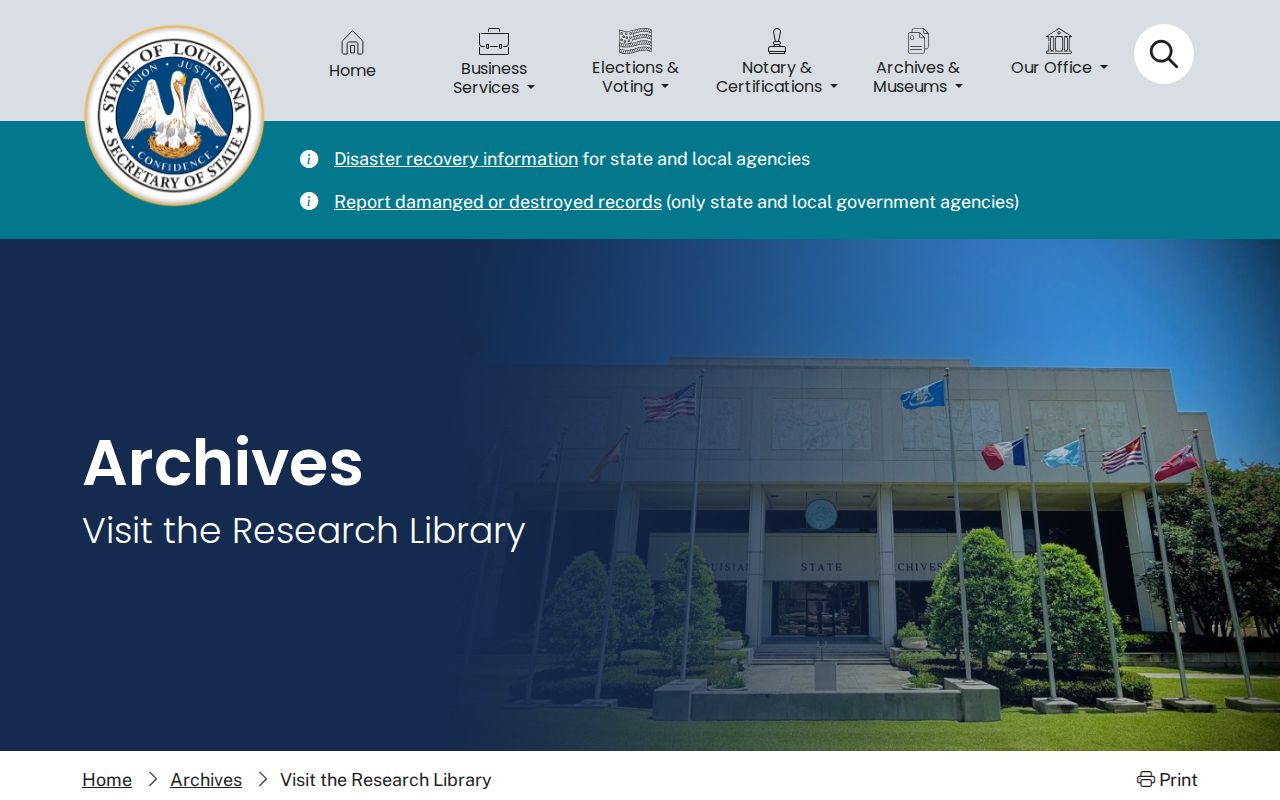
This route matters because no complete scanned Chalmette city directory was verified online. Copies are offered at minimal cost, but the precise fee depends on the request. Church and non-government guides, tax lists, and Clerk microfilm can bridge years where a telephone book is absent.
Chalmette Names Beyond Directories
The Library of Congress identifies The St. Bernard Eagle as an Arabi weekly and the parish's official journal in the 1880s. Its title record gives a description beginning with a May 8, 1884 issue, though publication dates are incomplete. Search title, place, publisher A. J. Padron, surname variants, streets, estates, and public notices.
Nunez holds St. Bernard Police Jury minutes from 1880 through 1929. Petitions, road work, contracts, and officeholders can place a name in civic context when no city directory survives. The courthouse moved, burned in 1884, suffered hurricane damage, and later shifted parish government to Chalmette, so duplicate indexes and scattered custodians are part of the research trail.
| Era | Record clue |
|---|---|
| 1880-1929 | Nunez Police Jury minutes |
| 1880s | The St. Bernard Eagle title and notices |
| 2003-2008 labels | LSM RG 514 telephone books |
| Current access | Nunez, State Library, State Archives, and museum requests |
Trace Family Through Chalmette Directories
Start with the most reliable name and date. Keep Spanish first and middle names, compound surnames, initials, nicknames, Anglicized spellings, and diacritics in play. St. Bernard history reflects French, Spanish, Isleño, African, British, and Croatian communities, so one modern spelling may miss the older form.
- Find the first likely entry and photograph the title page, date, and abbreviation key.
- Check the next available volume, recording every address and spelling change.
- If a reverse section exists, search the street number and nearby households.
- Pair the dated listing with the closest released federal census, parish minutes, or newspaper.
- Close gaps with church records, State Archives indexes, Nunez files, and verified obituaries.
A missing name can mean a move, death, omission, changed phone service, or a publication lag. For current address-keyed records, use the Chalmette street directory workflow rather than forcing a historical book to answer a modern question.
Isleño Voices in Chalmette Archives
Nunez documents more than 600 oral-history papers, audio, and video items across its local holdings. The Los Isleños group includes 96 oral-history videotapes, 12 Spanish-language recordings from the 1970s, and two films. Decimas, church-fair files, newsletters, and family stories can preserve kinship and neighborhood links that never appeared in a phone book.
Oral history is evidence of memory and community, not legal proof of identity. Compare a name with the Archdiocese of New Orleans sacramental catalog, Louisiana State Archives material, newspaper notices, and directory entries. That layered method respects the story while testing dates and relationships against independent records.
Ask for the collection name, tape or folder identifier, interview date, narrator, interviewer, and any transcript or release information. A recording can preserve a nickname, older street label, church, fishing community, or kin relationship that improves the next catalog search. Cite the spoken claim as an oral-history statement, then use a directory, sacramental record, deed, census schedule, or dated newspaper to test it. Copyright and donor restrictions may control copying or publication even though research access is free.
Los Isleños and Nunez are complementary. The museum's heritage work supplies community context and current contacts, while Nunez maintains indexed archival groups and research assistance. FamilySearch and the Archdiocese add sacramental catalogs, and the State Archives adds vital indexes and government files. Keeping each custodian attached to its evidence prevents a compelling family story from being mistaken for a certified fact.